Sri Lanka elects on the national level a head of state – the president – and a legislature. Sri Lanka has a multi-party system, with two dominant political parties. All elections are administered by the Election Commission of Sri Lanka.
President
The president is directly elected for a five-year term, through a version of Instant-runoff voting in which electors rank up to three candidates, and limited to only two rounds in total. If no candidate wins a majority in the first round of voting, second and third preferences from ballots whose first preference candidate has been eliminated are used to determine the winner. However, there was never an instance where a "run-off" count was needed since the introduction of directly elected president in the 1980s until the 2024 election. No candidate reached 50% in the first count in that election, so the second count was performed.
Parliament
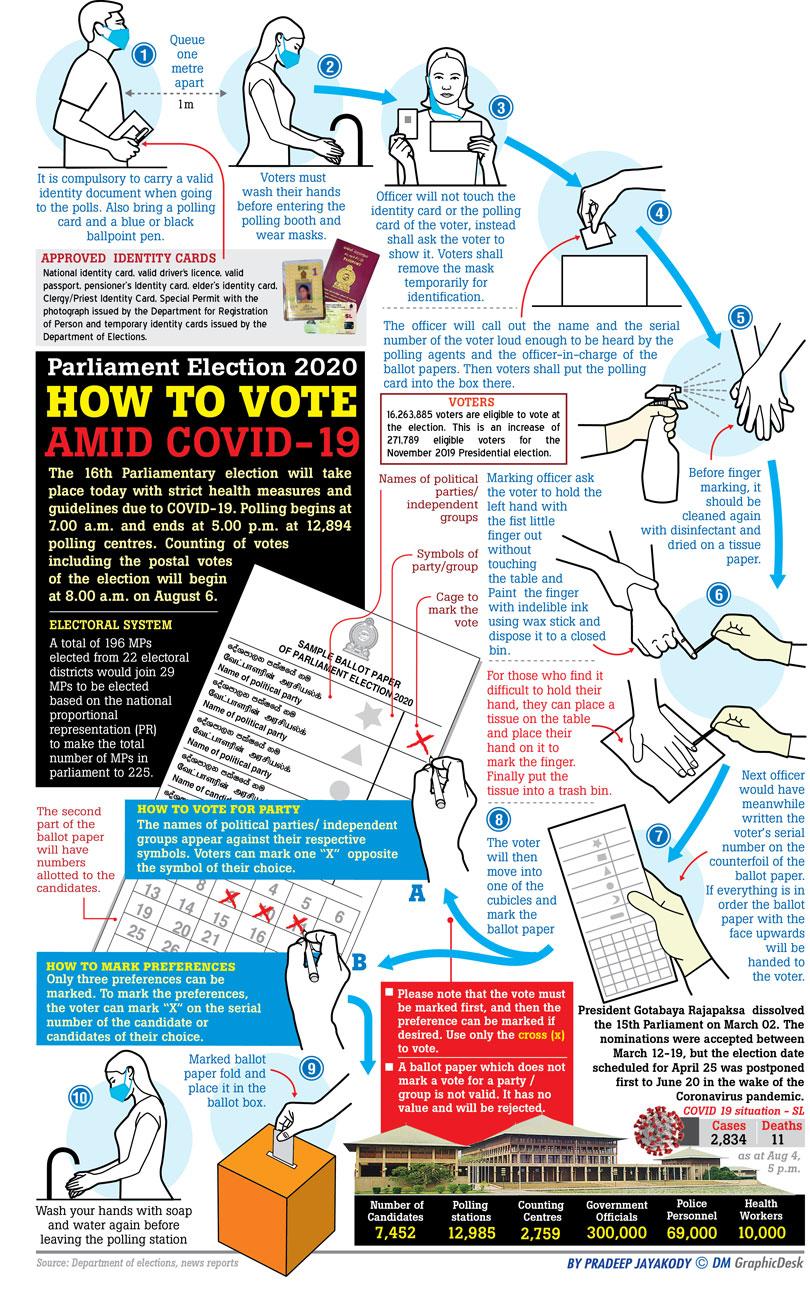
The Parliament has 225 members, elected for a five-year term, 196 members elected in multi-seat constituencies through proportional representation system where each party is allocated a number of seats from the quota for each district according to the proportion of the total vote that party obtains in the district. The other 29 which is called the national list are appointed by each party secretary according to the island wide proportional vote the party obtains.
Local Government
The Local government bodies in Sri Lanka;
- Municipal Councils
- Urban Councils
- Pradeshiya Sabha
are elected through the mixed electoral system.
Latest elections
2024 presidential election
2024 parliamentary election
President Anura Kumara Dissanayake's National People's Power alliance won 159 of the 225 seats, securing a two-thirds majority in the Parliament. This surge in the NPP's seat count from three in the previous Parliament marks a shift in Sri Lankan politics. Reports suggest that Dissanayake's campaign focused on anti-corruption, social welfare, and economic revival amidst the country's economic crisis resonated with voters.
In the north and east, a decrease in support amongst Tamil and Muslim voters for traditional ethnic parties were given to be the reason for the NPP's success.
The main opposition alliance, Sajith Premadasa's Samagi Jana Balawegaya, won 40 seats, a decrease from the previous election. Former President Ranil Wickremesinghe's New Democratic Front secured 5 seats, while former President Mahinda Rajapaksa's Sri Lanka Podujana Peramuna collapsed from 145 seats in the previous election, winning 3 seats.
National
District
Seat changes
List of MPs who lost their seat
See also
- Electoral calendar
- Electoral system
Notes
References
External links
- Department of Elections
- Adam Carr's Election Archive
- www.Srilankanelections.com - A website featuring Sri Lankan elections and results.